
Using DiDi in China: The Complete Guide for Foreign Visitors
The full DiDi walkthrough for foreign visitors: choosing the right app, registering with a foreign number, English settings, ride types and fares.
Hailing taxis on the street rarely works for visitors who do not speak Chinese — and it barely matters, because the supply moved online years ago. DiDi is the answer: China's Uber equivalent with over ninety percent of the market, an English interface, international credit-card support and automatic location. Here is the complete walkthrough, from installation to stepping out at your destination.
Setup Before You Need It
- Download the right app: DiDi is on the iOS and international Android stores with an English interface; alternatively skip the standalone app and use the DiDi mini-program inside WeChat
- Register with your home mobile number and one verification code
- Add payment: bind an international Visa/Mastercard under Payment, or link Alipay and WeChat Pay
- Configure: confirm the language is English and grant location permission — pickup points depend on it
Taking the Ride, Start to Finish
- Confirm pickup point: auto-located in most places; airports and rail stations have designated ride-hailing zones — walk to the numbered zone first, then request
- Enter destination: type in English or pinyin and pick from map candidates; save your hotel's Chinese name as a favorite and skip the typing forever
- Choose a ride type and confirm: see the table below; matching usually takes seconds to a few minutes, with an upfront price estimate
- Match car to app before boarding: plate number and model must agree — standard safety drill anywhere
- Communicate: mostly unnecessary; in-app chat auto-translates, or use the masked virtual number to call
- Hop out: payment auto-deducts from your bound card — shown in CNY, charged in your home currency at the day's rate; no cash, no tipping
Ride Types
| Type | In-app label | Typical urban fare | Character |
|---|---|---|---|
| Budget ride-hail | Express | ≈ ¥25-40 | The everyday workhorse |
| Premium | Premier | ≈ ¥50-80 | Newer cars, business travel |
| Taxi | Taxi | Metered | Street taxis booked via the app |
| Luxury | Luxury | ¥100+ | High-end cars; the airport pickup statement |
Fares assume 3-8 km in a major city; airport-to-center typically runs ¥100-170. Peak hours and rain bring surge multipliers — always announced upfront in the app.
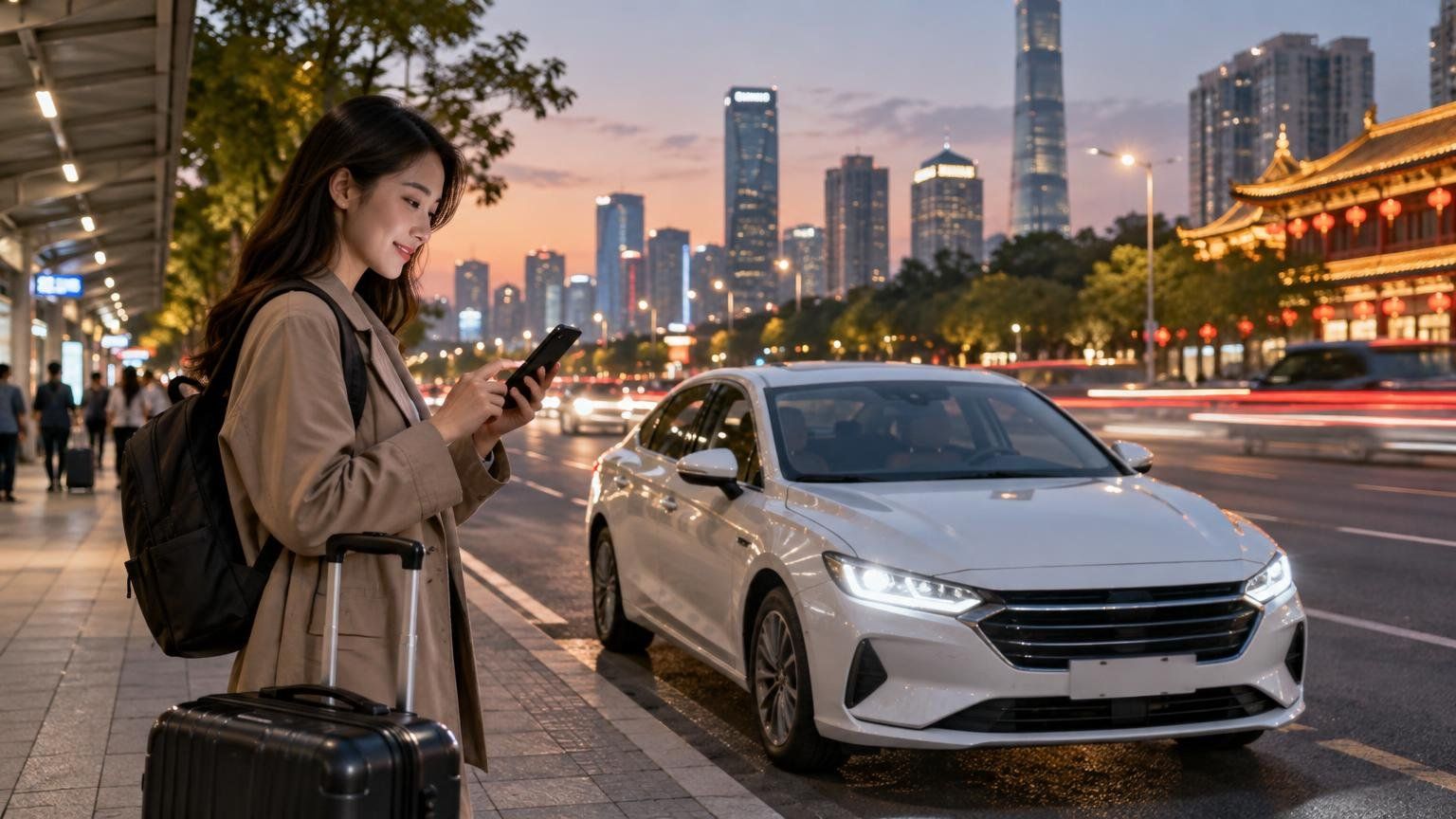
Three High-Frequency Scenarios
- Airports and stations: follow signs to the ride-hailing zone, put the zone number in your pickup note — drivers find you far faster
- Attractions: exit queues are brutal in high season; walking 200 meters away usually summons a car instantly
- Late night: Express supply thins; add Taxi or Premier. Solo female travelers should switch on trip sharing (below)
Safety and Useful Features
- Trip sharing: send a live tracking link to family in one tap
- Emergency help: in-app one-tap police contact and ride audio recording
- Receipts: e-invoices available after each ride for business expense claims
Frequently Asked Questions
Is DiDi or a street taxi cheaper?
Off-peak they are close, DiDi slightly pricier but friction-free; in surge the meter can win — compare both when it rains at rush hour.
Can I just use Uber?
Uber exited mainland China. DiDi is the entire answer here, and its English experience is genuinely good now.
What about lots of luggage?
For 28-inch-plus cases choose Premier or above for trunk space; note luggage in the ride request for multi-bag groups.
Need help planning your China trip?
Contact our travel advisors for personalized route suggestions.