
Using Alipay and WeChat Pay in China: Foreign Card Setup Guide
China runs on mobile payments, and both Alipay and WeChat Pay now accept foreign cards. Setup steps, QR-code etiquette, fees, limits and fixes for common errors.
In mainland China, everything from five-star hotels to the street-side jianbing stall settles on a phone — cash gets you blank stares and card terminals sit idle. The good news: Alipay and WeChat Pay both fully support international bank cards now, and preparation has never taken less time. This guide runs from registration through troubleshooting.
Pre-Departure Checklist (Do This at Home)
- Download both apps: Alipay and WeChat are on every international app store
- Register: a foreign mobile number works; switch WeChat's interface to English in settings
- Bind an international card: Visa, Mastercard, JCB, American Express and Discover are all accepted
- Run one test payment: top up phone credit or make any small in-app purchase to confirm the pipeline works before you land
Alipay: Your Daily Driver
- Open Alipay → Me → Bank Cards → Add Card and enter your international card details
- Once linked, scan-and-pay works immediately; charges convert to your card currency at the day's rate
- Level up with Tour Pass: a prepaid wallet topped up in fixed amounts from your international card. It locks your exchange rate at top-up and keeps small frequent payments from tripping your bank's fraud filters
- The app also hails taxis, sells metro tickets and orders delivery — one app covers half your digital life in China
WeChat Pay: The Backup You Still Need
- WeChat → Me → Services → Wallet → Add Card, and bind your international card
- Pay anywhere WeChat is accepted by showing your payment code or scanning the merchant's
- WeChat has no dedicated tourist mode and slightly rougher localization, but unmatched reach: some small merchants, community group-buys and ride scenarios are WeChat-only
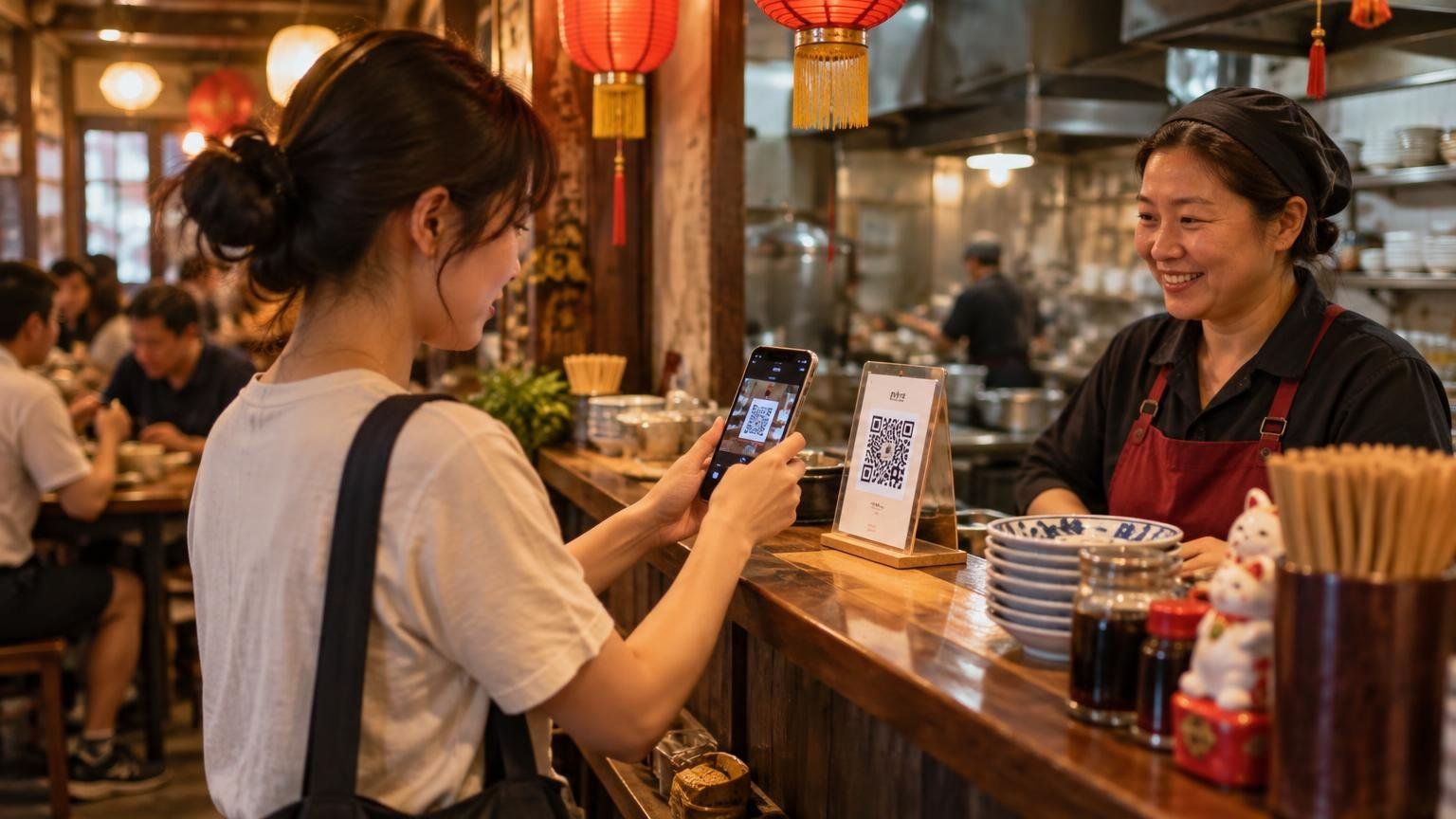
The Two Directions of Scanning
- You scan the merchant: a QR code on the counter or table; open Scan, point, enter the amount, confirm. Typical at small restaurants and taxis
- The merchant scans you: open your Pay code and let the cashier's scanner read it. Typical at chains and supermarkets
Cannot remember which is which? Watch the person ahead of you and copy them. Cashiers dealing with foreign faces usually just reach for your phone and point.
Fees, Rates and Limits
- Exchange rates: settlement close to the mid-market rate — generally better than airport counters; your issuing bank may add a foreign-transaction fee (0-3%)
- Platform fees: ordinary scan-and-pay purchases are essentially fee-free; current platform rules govern the details
- Limits: per-transaction and annual caps apply to foreign cards and are shown in-app (platforms adjust periodically); for serious purchases — jewelry, art — use a physical credit card
- Refunds: return to the bound card within 1-14 business days
Should You Still Carry Cash and Cards?
Yes, but modest amounts:
- ¥200-500 in notes for the rare holdouts — remote stalls, some temple tickets, luggage-deposit locks
- One physical credit card for hotels and malls that take foreign cards directly, and as the fallback if mobile payments fail
- Exchange at city bank branches rather than airports for meaningfully better rates
Troubleshooting
| Symptom | Likely cause | Fix |
|---|---|---|
| Card binding fails | Issuing bank blocked the overseas binding request | Call your bank to enable international online transactions, retry |
| Payment declined | Over single-transaction limit / bank fraud filter | Try the other app; split the amount; fall back to the physical card |
| Identity verification requested | Balance features trigger KYC | Complete in-app ID verification with your passport — minutes |
| Merchant QR shows no amount field | Some small-merchant codes only work with local accounts | Ask staff to enter the amount and scan your payment code instead |
Frequently Asked Questions
Does Apple Pay or Google Pay work?
At Chinese checkout terminals, Apple Pay rides the UnionPay system, so foreign-wallet taps mostly fail. The workable equivalent: add your international card inside Alipay — close to the same tap-and-go feeling within the app.
Should I tip?
No. Tipping is not part of mainland culture; the scanned amount is the final amount, and extra usually just confuses the cashier.
What if my phone dies?
The occupational hazard of a cashless country. Shared power banks rent by the hour at essentially every restaurant and mall (rented, naturally, through these very apps); carry a cable and start important days above 50%.
Can I keep using them after leaving China?
Some overseas merchants — airports, duty-free and Chinatown districts — accept Alipay/WeChat Pay, so yes; unlink cards whenever you are done.
Payments are the first hurdle of independent travel in China — and the most solvable one. If you would rather skip the setup entirely, our private itineraries can prepay transport, tickets and dining as one package; you just show up curious.
Need help planning your China trip?
Contact our travel advisors for personalized route suggestions.